
Well Water Solutions
A practical guide to well water: what can go wrong, why testing comes first, and how to match treatment to your results. No single system solves every well-water problem.
Well water vs. city water
City water is treated and monitored by a utility. A private well isn't, so the homeowner is responsible for testing and treatment. Well water can change with seasons, rainfall and nearby activity.
Common well-water problems
- Iron: orange or rust staining
- Manganese: black staining or slime
- Hydrogen sulfide: rotten-egg odor
- Sediment: sand and grit
- Hardness: scale and spots
- Tannins: tea-colored water
- Bacteria and other microbes: no taste or smell to warn you
Why water testing comes first
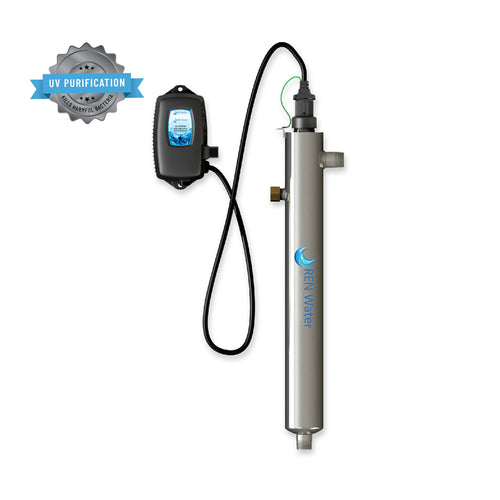
Each problem needs a different treatment, and some treatments need others in front of them. UV, for example, needs clear water. A lab test tells you exactly what you're treating, so you don't buy the wrong system.
Choosing treatment from your results
| Test shows | Treatment to consider |
|---|---|
| Sediment | Sediment pre-filtration |
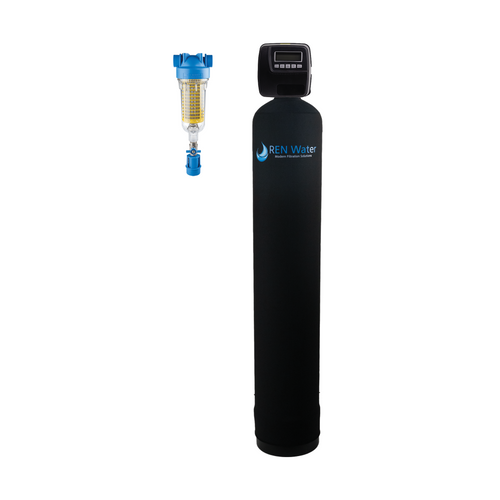
| Iron, manganese, sulfur | Oxidation filtration (Well Water Filter System) |
| Tannins | Tannin system (often with softening) |
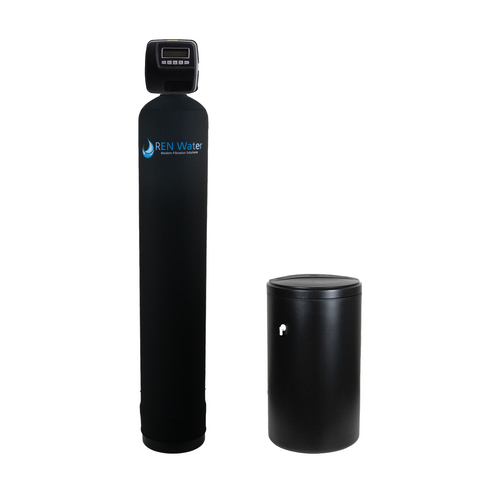
| Hardness | Softener or salt-free conditioner |
| Bacteria | UV disinfection or chlorine injection |
When to use pre-filtration, softening or UV
Pre-filtration protects everything after it. Softening goes after iron treatment. UV is always the last stage, on clear, filtered water. Many well homes use two or three stages together.
Installation and ongoing maintenance
Well systems install after the pressure tank. Tank systems need a drain and an outlet. Re-test yearly, and any time the color, smell or taste changes. See the Support Center for manuals.
Step 1
Test your water
Step 2
Treat based on results
Read: Well Water, Test First, Then Treat · Send REN your test results · Common water problems